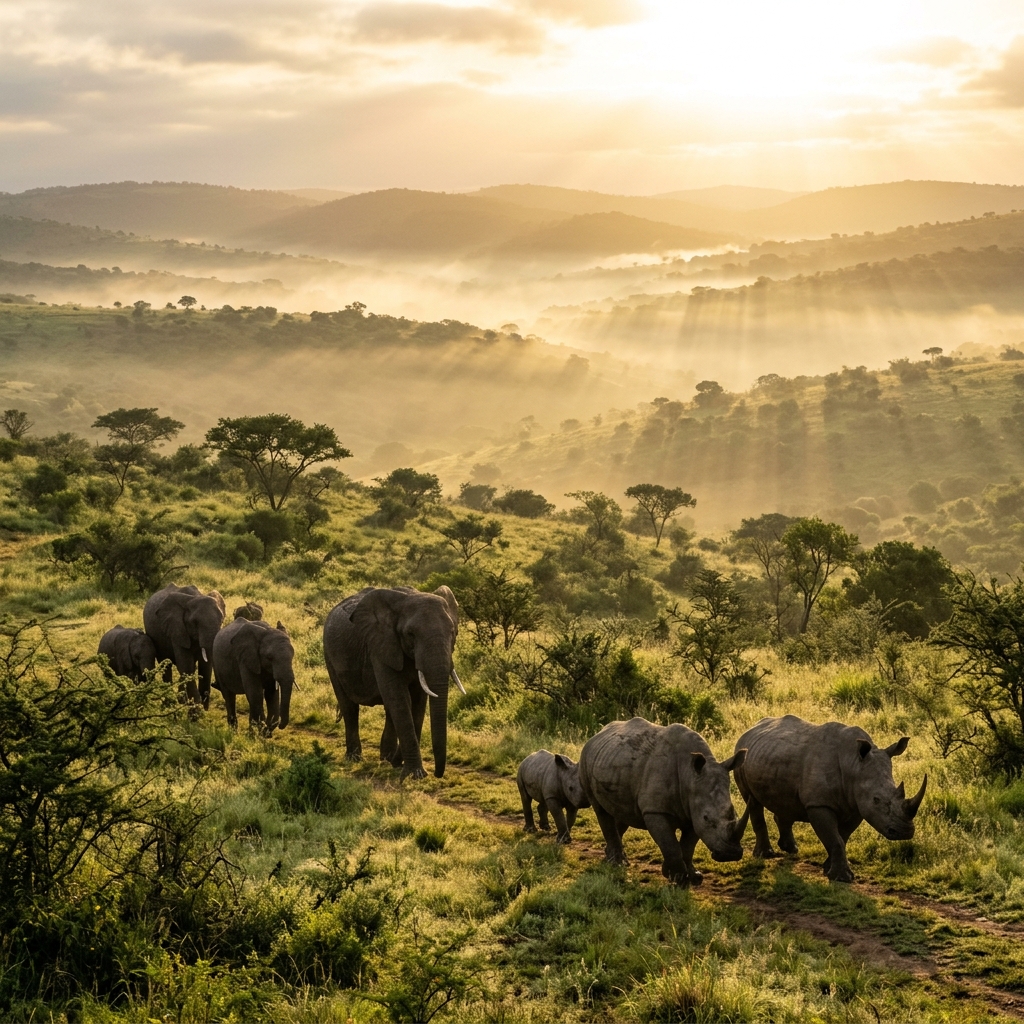
Northern Scarp & Mistbelt Forest
The northern sector around Hluhluwe is characterized by dramatic mountainous topography, steep forested gorges, and mistbelt scarp woodlands. Fed by warm moisture from the Indian Ocean just 50 km away, this zone receives double the rainfall of the southern plains, sustaining evergreen canopies and closed montane thickets.
Indicator Species
Acacia Savanna & Mixed Thornveld
The central and southern iMfolozi sectors transition into sweeping rolling plains dominated by Sweet Thorn (Vachellia karroo), Scented Thorn (Vachellia nilotica), and red grass (Themeda triandra). Here, the legendary "grazing lawn" phenomenon created by white rhinos and wildebeest prevents wild fires and creates micro-habitats for diverse grazers.
Indicator Species
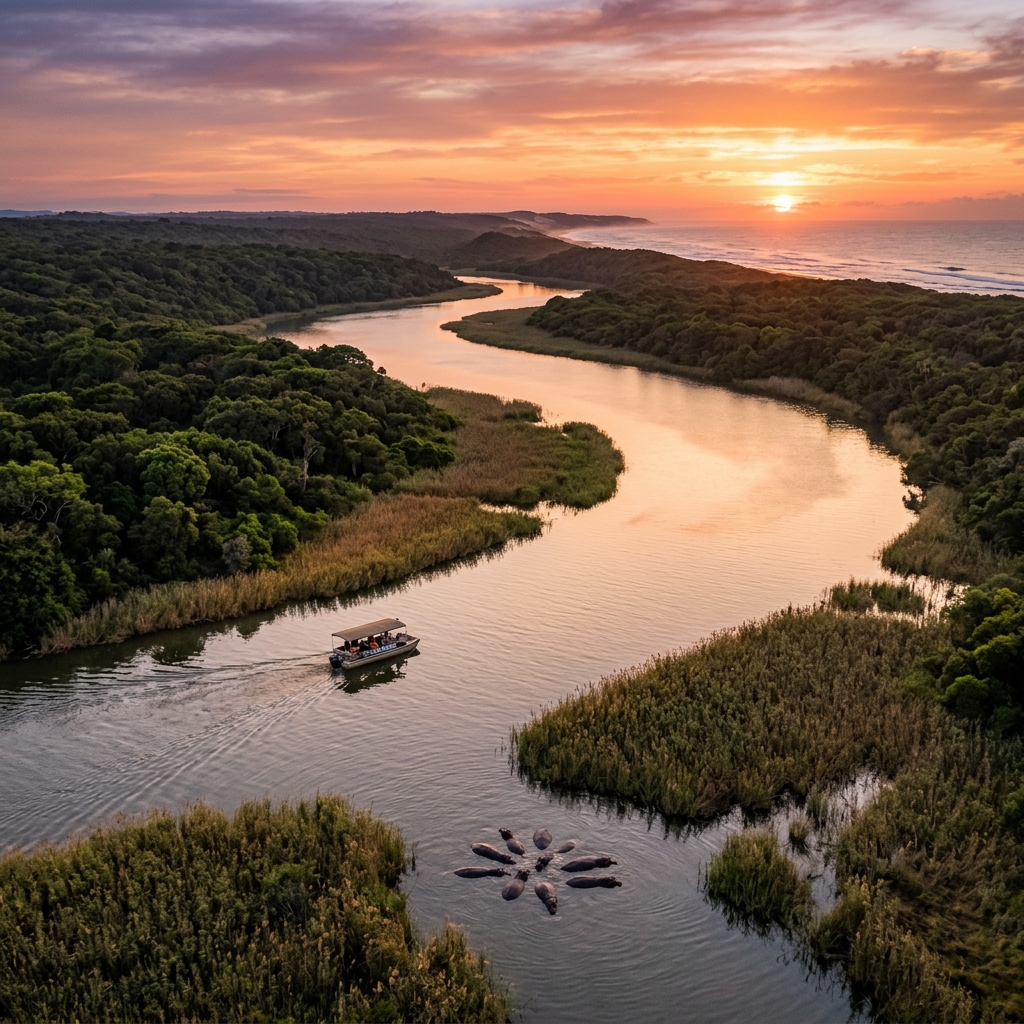
Riverine Corridors & Alluvial Beds
The Black and White iMfolozi Rivers converge inside the southern wilderness, cutting vast sandy conduits lined by ancient Sycamore Figs (Ficus sycomorus), Weeping Boer-beans (Schotia brachypetala), and towering Fever Trees. In the dry winter months, sub-surface water pools beneath the sand become magnets for hundreds of elephant herds.
Indicator Species

Relic Sand Forests & Thicket
Found on ancient Pleistocene wind-blown sand dunes, Sand Forest is one of Africa’s rarest and most botanically fragile vegetation types. Characterized by dense, multi-tiered hardwood canopies that exclude fire, it houses rare endemics found nowhere else on earth, providing sanctuary for delicate browsers like the miniature Suni antelope.